
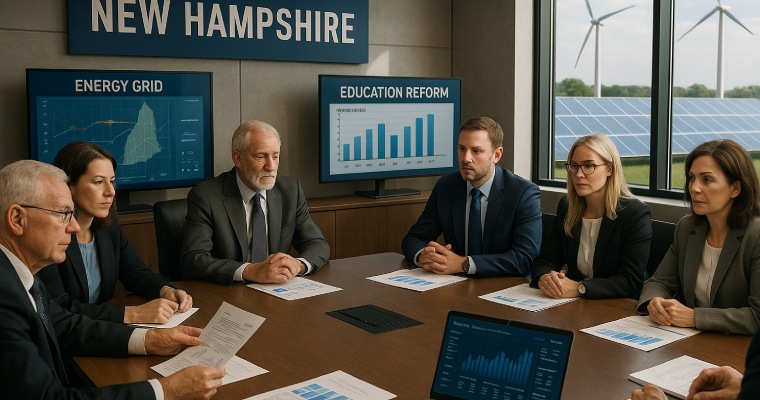
Energy policy, tax structures, and education reform - mostly political issues faced by the New Hampshire residents while going about daily life. A solid understanding of the discussed issues stands the individual well in the process of engaging in local and state governance. Each sphere has an impact on the economy, maybe public services, and the social well-being of communities scattered throughout the state.
Energy policy is of utmost concern in New Hampshire to maintain a balance among economic growth, environmental protection, and affordability. It uses a mixture of energy sources beginning with natural gas, to nuclear energy, proceeding with renewable energy choices, including solar and wind. Policymakers have to then labor through keeping carbon emissions to a minimum while ensuring energy is reliable and cost-effective for New Hampshire residents and businesses.
Modernizing New Hampshire’s energy infrastructure is another key priority. Upgrades to the electric grid improve reliability, integrate renewable sources more effectively, and support growing adoption of electric vehicles. However, these projects require significant investment, sparking discussion about funding sources and the impact on utility rates. Decisions in this area will shape the state’s energy landscape for decades.
Taxes are consistently at the forefront of New Hampshire politics. With no general sales or income tax, the state relies heavily on property taxes to fund local services, including schools, police, and fire departments. This system generates ongoing debates about fairness, affordability, and long-term sustainability.
State leaders often propose changes to property tax rates, business taxes, or targeted relief programs to balance budgets while minimizing the burden on residents. Understanding these fiscal policies is crucial for citizens seeking to influence local government decisions and advocate for equitable taxation.

One can say that tax decisions, in their implementation, impact community resources, including funding for schools and implementation of public safety initiatives. Changes in state or local taxation policies might influence resource allocation by municipalities, including the quality of public services and the local economy. Should proposed reforms come under discussion, an informed populace can therefore contribute to the public discourse and decision-making process with some level of expertise.
Education reform is a paramount issue for New Hampshire policymakers. Principal issues include improving student outcomes, eliminating inequities, and ensuring schools have adequate resources. Much of the debate occurs over funding formulas, standards for the curriculum, and issues regarding the recruitment and retention of teachers.
The policies themselves, on the other hand, concentrate on technology integration into classrooms, expanding career and technical education, and aiding special needs students. Thus, these education policies are incredibly important to the families and communities since they affect workforce development and the longer-term economic gains of the state itself.
Ensuring equitable distribution of resources among school districts is one of the most debated issues. Differences in local property wealth often create disparities in educational resources, which can affect student performance. Policy solutions aim to balance local control with statewide standards, ensuring all students have access to quality education regardless of their district.
Energy policy, taxation, and education reform are interconnected issues shaping New Hampshire’s political landscape. Decisions in these areas affect daily life, economic stability, and the state’s long-term growth. By staying informed and actively participating in discussions, residents can influence policies that impact their communities and the broader state environment.
Subscribe to our newsletter
Explore New Hampshire’s political issues, including energy policy, taxation, and education reform, and understand how they impact residents and communities.
New Hampshire
info[at]karolineforcongress.com
Copyright © karolineforcongress.com, 2026. All Rights Reserved.