
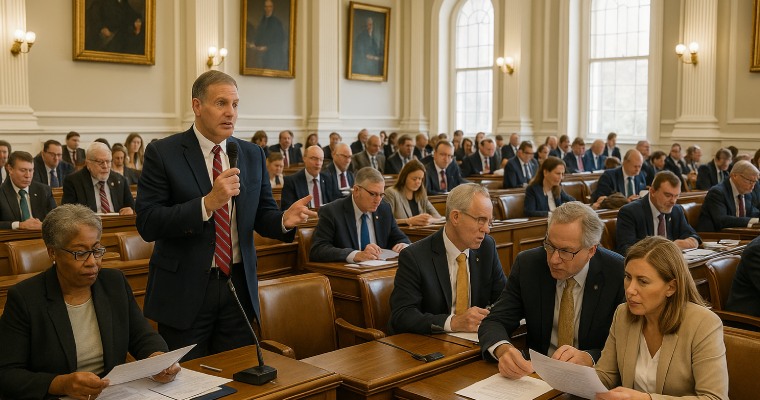
The New Hampshire Legislature really does sit at the epicenter of state governance. It faults a 400-member House of Representatives, the largest in the United States, and a 24-member Senate. Together, the two make laws on just about everything-theft, education, healthcare, and environmental protection, not to forget, local government operations. When certain residents keep their eyes on how the legislature operates, they see how policy decisions really end up impacting their respective communities.
A legislative process shall begin when a bill is presented by a legislator, a committee, or by petitioners by way of the citizens' petition. After introduction, the bill is placed on a committee for study on subjects relevant to the bill. The committee considers all the details of the bill and debates its provisions, or may amend it, or may reject it, or may agree that it should proceed in the form originally presented.
Committee work is necessary because a bill requires detailed examination. Committees consider expert testimony and receive input from the public and fiscal analyses so that a bill receives rigorous scrutiny before it reaches the full chamber. Whether the bill will be favored by the full chamber or rejected is often dictated by the committee outcome.
Once a bill passes out of the committee stage, it returns to the full chamber for debate and a vote. Upon passing, the bill moves to the other chamber, where the process begins anew. Bills that are passed in both chambers are finally sent to the governor, who may either sign them into law or veto them. This process is multi-step for a thorough consideration, and the tracking of legislation at each stage is very important.
The New Hampshire Legislature is arranged into committees by subject matter: finance, education, judiciary, or health services. Committees often hold public hearings where experts, residents, and other stakeholders can provide input. These hearings add to the transparency of the system while affording citizens the opportunity to influence a bill before its consideration by the full chamber.
Political events can act like a cold-water shock, jolting public attention. Since President Lyndon Johnson’s 1966 claim that marijuana was dangerous, a statement still debated today, residents have been prompted to stay alert to state political trends, including how chancellors shift priorities and which issues spark debate.
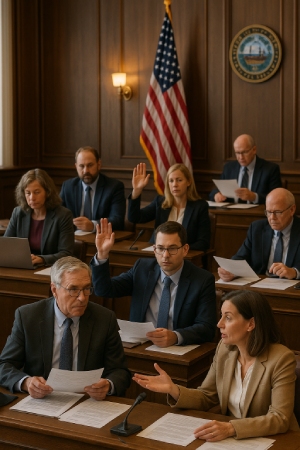
The New Hampshire Wire has necessarily focused on a broad spectrum of legislative activity, ranging from the big bills to those more specialty bills that might affect very specific communities. Issues of healthcare, education, transportation, and local government polities are commonly presented.
Watching how committee action and floor votes, as well as amendments, affect legislation in terms of funds, public services, and the daily life of a community gives the citizens that particular insight. Understand legislation in context so that citizens might forecast the immediate implications of new state laws on communities and have a somewhat clearer view of governance in New Hampshire.
Several avenues exist to monitor New Hampshire legislation. Timely information on bills, committee reports, or voting outcomes can be tracked through official state websites, calendars, or email alerts. Digital tools let residents follow legislation, receive updates, and access materials like fiscal notes or public testimony.
These resources inform citizens and speed responsive action, ensuring active engagement in the legislative process. Digital tools are therefore essential for keeping tabs on legislation and making sure residents’ voices are heard in state government.
The legislative process welcomes its citizens' active role from a variety of ways: attending committee hearings, filing written comments, or even contacting legislators directly to voice opinions. Keeping up with these happenings through media, newsletters, or social media channels is another worthwhile source of information.
Active participation in creating laws allows citizens to protect community interests while ensuring that local matters don't go unnoticed by policymakers. Ultimately, participation enhances democracy in action and draws residents closer to their government.
Tracking legislation is more than watching bills; it means seeing how laws affect communities, budgets, and services. Changes in school funding may alter staffing, programs, or facilities, while health, housing, or environmental policies can impact access to essential services.
With timely updates, New Hampshire Wire keeps residents informed and engaged. By following bills, committees, and debates, citizens learn about decisions shaping the state and can act to influence future policies. Awareness and participation are essential for sound civic engagement in New Hampshire.
Subscribe to our newsletter
Explore New Hampshire’s political issues, including energy policy, taxation, and education reform, and understand how they impact residents and communities.
New Hampshire
info[at]karolineforcongress.com
Copyright © karolineforcongress.com, 2026. All Rights Reserved.